Saturday, August 12, 2017

Devon White, Breakfast of Champions


CANNIBALISM CAN RUN THE GAMUT from tribal to survival -- think the Donner Party, or Alive! by Piers Paul Read --  to the sci-fi horror of Soylent Green.* It seldom comes up** in conjunction with baseball.

Breakfast of A.L. West Champions
Leave it to the California Angels to fill that void.

In 1987, the defending American League West champs had a new star. His name was Devon White, and he played one of the virtuoso glamour positions in baseball: centerfield, that place rhapsodized in song by John Fogerty. Centerfield, that verdant expanse manned by men like Tris Speaker and Joe DiMaggio, by Willie, Mickey and the Duke.

And now White, a 24-year-old Jamaican-born switch-hitting blend of defense, speed and some offensive pop who grew up in New York City, cheering for Mays and the New York Mets

Going into action on July 31, the Angels' newfound phenom was hitting a solid .284, with 18 homers, 22 steals and 64 runs batted in. That night, against the visiting Seattle Mariners, White would bat clean-up just behind the prior year's phenom, Wally Joyner, who'd finished second in Rookie of the Year balloting to the Oakland Athletics' Jose Canseco.

But how best to market the multi-talented Mr. White? The Angels solution was to make him a commodity. Big league slugger Dave Kingman once said athletes were pieces of meat. California went to a different trading pit and came back with cereal. On the cover of the Halo Magazine game program, they would sell their outfielder not as an image on a box, but as the food itself. White as Wheaties, breakfast of A.L. West champions.

Friday night, lights.
"The crunchy whole wheat flakes breakfast of the Angels," boasted the box-mocking magazine cover. "Power, speed, defense from 100 percent whole wheat."

Start your day right, with a bowl of Devon White.

Net weight, 170 lbs. Kind of big to lug home from the Kroger or Safeway, but a good fit for the fully-enclosed Anaheim Stadium shared then by the National Football League's Rams.

That night the Angels tattooed the Mariners, 8-2, before 32,471 people. White and Joyner hit back-to-back homers off Seattle starter Scott Bankhead in the third inning and after a Mark McLemore sacrifice fly scored Bob Boone in the fourth, Bankhead exited with Anaheim ahead, 4-0.

The Angels' nutritious outfielder finished the night 1-4, with that round-tripper and two runs batted in. He was also caught stealing because, well... it happens.

Allowed to play out the season without being devoured by teammates, opponents or fans, White finished with slightly soggier stats than that end of July snapshot: a .263 average with 33 doubles, 24 homers, 87 RBIs and 32 stolen bases. He finished fifth in A.L. rookie of the year balloting won by the A's Mark McGwire.

The original scoreboard,
exiled to the parking lot post-enclosure
California would tumble to 6th place in the seven-team division, finishing 75-87, ending the career of veteran manager Gene Mauch.

White played three more years in Anaheim, winning two gold gloves for defensive excellence and being selected to the A.L. all star team once before being traded to Toronto in a lopsided trade where the primary return was outfielder Junior Felix, who'd be out of the majors by 1995.

He would win five more gold gloves with the Blue Jays while making the remarkable seem routine, qualify for the all star team again and be part of two World Series winners, proving more champion than breakfast.

White won another title in 1997 as a member of the National League's Florida Marlins and retired in 2001 after spending his last year with the Milwaukee Brewers. He was 38. Today, he's the hitting coach for the Blue Jays' AAA affiliate Buffalo Bisons.

* Spoiler alert!
**Seldom, but not never.
_____________________________

In the Summer of 1987, soon after graduating from college, me and my buddy Chris took a baseball tour of California. Mostly baseball at least, and hell of a good time. This is the seventh part of a series inspired by those 16 days on the road.

-- Follow me on Twitter @paperboyarchive
Wednesday, August 9, 2017

Go Ahead... Make My Sundae

TWO YEARS AFTER MAKING "CITY HEAT," Clint Eastwood told an entire town to cool it.

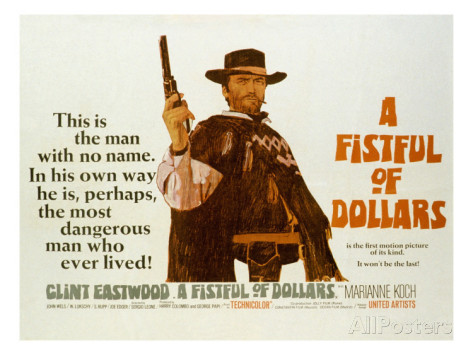
Clint Eastwood: mayor. ice cream vigilante
The place was Carmel by the Sea, on the south shore of California's Monterey Peninsula, a berg famous for its setting, its arts scene and -- for a time -- its prohibition on the sale of ice cream cones on its streets.

Eastwood -- an actor, director and Carmel resident -- changed all that in 1986 when he ran for mayor of the tiny coastal municipality and won. Then the man famous for playing Dirty Harry, decided to mess up the town.


He'd take out the ice cream ban.

Blam!

To be sure, the reason behind the rule wasn't just some case of absurd nanny-state fastidiousness run amok. According to a contemporaneous Los Angeles Times story, the denial of an ice cream stand permit -- and all of the resultant publicity it occasioned -- was prompted by concerns about water consumption in a time of drought.

But that wasn't all Eastwood did. Sixteen months into his term, the New York Times reported, the actor-turned-mayor had, "provided more public toilets, built new stairways to the town beach and expedited previously stalled efforts to expand Carmel's library."

Still, Eastwood served just a single two-year term as mayor of the mile-square city, population 4,000 or so, before returning to the serious work of acting and directing.

During his tenure though, local artist Jim Miller had made up a commemorative poster, which then became the cover of the Carmel tourist guide. The poster's tagline, not included on the guide's version, promised, "Law, Order and Ice Cream."

The image of a bearded, six-gun wielding, western hat-wearing Eastwood, was apparently inspired by promotional art for films like A Fist Full of DollarsHigh Plains Drifter, and The Outlaw Josey Wales, but with a twist -- or more appropriately, a triple scoop -- vanilla or perhaps butter pecan ice cream cone in his left hand.

Do you feel like sprinkles today, punk?

Inside, the publication promising directions, maps and essential information, included not one but two articles on where to find ice cream, together with a conspicuously placed ad to underscore the point.

As the man said, "go ahead, make my sundae."
_____________________________

In the Summer of 1987, soon after graduating from college, me and my buddy Chris took a baseball tour of California. Mostly baseball at least, and hell of a good time. This is the sixth part of a series inspired by those 16 days on the road.

-- Follow me on Twitter @paperboyarchive.com

Saturday, August 5, 2017

Reggie, The Original Bash Brother, Comes Home

REGGIE JACKSON CAME HOME in the summer of 1987. Not to Wyncote, PA, where he was born 41 years earlier and grew into a prodigal multi-sport star at nearby Cheltenham High School, but to Oakland, CA, where that star became one of the biggest, brightest and brashest in the nation, while playin' for the Swingin' A's.

Between 1971 and 1975, he'd led them to five straight first place finishes, and from '72 to ''74, three consecutive championships, then he was gone, traded just before opening day 1976.

Reggie Jackson of the 1987 Oakland Athletics.
Now he was back, at the end of a career that saw him play for a total of 12 division winners, six pennant winners and five World Series winners (though an injury kept him out of action in the 1972 tilt against the Cincinnati Reds).

Home, after four American League home run titles and the 1973 AL Most Valuable Player award.

Home, after 14 All Star Game selections and two World Series MVP awards, the second of which came after he crushed the Los Angeles Dodgers, hitting three round trippers in three swings to close out the 1977 fall classic.

Home after a year in Baltimore, five in the Bronx and five more in Anaheim, playing for the argumentative Earl Weaver, the tempestuous Billy Martin, the calming Bob Lemon, the defiant Dick Howser and the luckless Gene Mauch. Home after playing for Charlie Finley, George Steinbrenner and Gene Autry.

Home as Mr. October, as the self-proclaimed "Straw that Stirs the Drink." Home as a candy bar.   "When you unwrap a Reggie Bar, it tells you how good it is," his Hall of Fame teammate Catfish Hunter once said. Now, in his final season, Reggie no longer needed to be the bonbon, the straw or even a main ingredient in the Oakland Athletic's potent cocktail, he just needed to be in the mix.

Managed by future Hall member Tony La Russa, the A's franchise was on one if it's periodic upswings, if not yet at its peak. First-baseman Mark McGwire, 23, was in the midst of a freshman campaign that would see him hit .289 with 49 homers and 118 runs batted in, winning Rookie of the Year honors. Behind him, 1986 AL Rookie of the Year Jose Canseco, just 21 and on his way to belting 31 round-trippers and driving in 113. Together they were The Bash Brothers.

McGwire, Canseco and Reggie, men who would combine for 1,608 home runs over their careers, together in one Athletics line up. Surely somewhere Jimmie Foxx was lacing his cleats.

Joining them: 1979 co-RotY shortstop Alfredo Griffin and 1981 AL batting champ Carney Lansford, starting pitcher Dave Stewart -- embarking on the first of his four consecutive 20-win seasons -- and Hall of Fame reliever Dennis Eckersley.

"I think the ingredients are all here for me to have a good year," Jackson, bash brother emeritus, said in one of two features about him in the game program for July 27, 1987, when his team hosted the California Angels at the Oakland Alameda County Coliseum.

The Oakland-Alameda County Coliseum,
July 27, 1987


The A's, behind Stewart, cruised to a 6-1 win that night. Only catcher Terry Steinbach homered for the home team. Shortstop Gus Polidor struck a blow for the visitors.

Jackson -- batting sixth -- struck out four times (a drop in his MLB-record bucket of 2597 Ks, which still stands today). He ended the night hitting a discouraging .203. For the year, he batted .220 with 15 homers and 43 RBIs. In 336 at bats over 115 games, he struck out 97 times.

Though La Russa's squad would go just 81-81 that year, the table had been set, the appetite whet. Starting in 1988, the franchise strung together three straight pennants, repeating the feat accomplished by Jackson's A's of the '70s, and won the 1989 World Series.

Reggie finished his illustrious career with a .262 batting average, 563 homers and 1,702 runs batted in. He also had 18 round-trippers and 48 RBIs in 77 post-season games, 10 of those clouts in the series. He made the Hall in 1993.

The Coup


Two weeks before my visit, stop four on my California/ballpark tour, the Coliseum had hosted Major League Baseball's All Star Game, further proof the sometimes moribund A's, whose attendance had dipped to 306,763 for the entire 1979 season, were on the rebound. For those of us who care, the All Star Game program -- in this era before eBay -- was a trophy worth hunting.

The trophy
Mid-game, I chatted up one of the souvenir stand vendors about the ballpark -- better than its reputation -- and the stadium food -- more adventurous than I'd seen elsewhere -- and finally rounded to the subject of the A-S program.

He said he had none and directed me down the concourse, past the first aid station and through a door where I found myself in a souvenir stock room.

"Hi. Mike sent me," I told a woman behind the counter, feigning a casualness I didn't feel. "I'm looking for an All Star Game program."

She dropped back into the steel shelving behind her and reappeared moments later, program in hand.

"Do you work here?" she asked, looking me over.

"No," I replied.

"Five dollars," she said. I handed over the money, suppressed a smile and walked out. Quickly.
_____________________________

In the Summer of 1987, soon after graduating from college, me and my buddy Chris took a baseball tour of California. Mostly baseball at least, and hell of a good time. This is the fifth part of a series inspired by those 16 days on the road.

-- Follow me on Twitter @paperboyarchive

Sunday, July 30, 2017

"Hummm... Baby," The Thrill and One Flap Down... Immediately Followed by "Dude, Where's Our Car?"


WILL "THE THRILL" CLARK never made baseball's Hall of Fame. Neither did Jeffrey Leonard, he of the notorious home run trot, "one flap down."

But those men,  a white southerner and black northerner who openly clashed with each other in 1987 made the San Francisco Giants into a team to be reckoned with.

Humm, baby. Humm, baby? Yes. Humm, baby.

It had been 16 years since the Giants made the post season, a quarter century since their last World Series appearance, a seven-game loss to the New York Yankees.

A mid-summer day's twin-bill.
Despite the presence, at various times, of Willie Mays and Willie McCovey, of Garry Maddox and Gary Matthews, of Dave Kingman, of Bobby Bonds then Bobby Murcer, of  John Montefusco and Vida Blue, the Giants had long languished in baseball's shadows.

Across San Francisco Bay, the Oakland A's had a string of five straight playoff appearances and three consecutive championships. Within the National League West, the Giants had been totally eclipsed by the long-time rival Los Angeles Dodgers and the Cincinnati Reds. In fact, every NL West team had finished first at least once since the San Franciscans had last managed the feat: the Reds in '72, '73, '75, '76 and '79,  the Dodgers in '74, '77, 78, '81,'83 and '85, the Houston Astros in '80 and '86, the Atlanta Braves in '82 and the San Diego Padres in '84.

The title merry-go-round was spinning and the Giants weren't on it.

Change came midway through the disastrous 1985 season when a 62-100 record landed them in the NL West basement. After 144 games, they fired manager Jim Davenport and hired sagacious Roger Craig. The pitching anchor of the original and terrible New York Mets, Craig suffered through back-to-back 20-loss campaigns. He knew about adversity. His approach: stay positive.

Candlestick Park, July 26, 1987. Announced attendance: 41,256

At spring training 1986, he called journeyman catcher Brad Gulden "humm baby," for still giving 110 percent effort in a career nearing its end. According to legend, the phrase was a contraction and corruption of the sandlot shout of encouragement, "C'mon, baby!"

By 1987, the Giants had a team full of humm babies led by the veteran outfielder Leonard, 31, and Clark, 23, who'd starred at Mississippi State and -- as the Giants were bottoming out in '85 -- won the Golden Spikes Award as the best amateur ballplayer in America.

Humm, baby indeed.

By July 26, though just one game over .500, the 49-48 Giants trailed the first place Reds by just a single game. On that day's schedule: a double-header with the NL East-leading St. Louis Cardinals at windswept Candlestick Park.

They were about to ignite.

Rallying back from a blown 2-1 lead, the Giants took the opener in 10 innings on a walk-off, three-run homer by The Thrill. Then, though the Cards struck first in game two, they were decked, 5-2, with Clark clubbing his second round-tripper of the afternoon.

From there, the team went 39-24, overtaking the Reds by six games to win the West. Awaiting them in the NL Championship Series: the Cardinals. Now it was Jeffrey Leonard's turn to shine.

The Pride of the Giants, until he wasn't.
Leonard, like Clark, was blunt-spoken. If you liked it, fine. If not? Too bad. The Cardinals were not fans. The St. Louis fans were not fans.

Over the 7-game series, the Giants outfielder torched Cardinals pitchers for four home runs, each punctuated by a somewhat leisurely tour of the bases, his left arm at times deliberately slack at his side. One Flap Down, again and again and again. For the series, Leonard batted .417 with 10 hits in 24 at bats, including those round-trippers. He walked three times, scored five runs and drove in five.

While Leonard's efforts earned him series most valuable player honors, it wasn't enough to carry the Giants past the Cards. They lost in seven games. In mid June of the next season, he was traded to the Milwaukee Brewers for utility man Ernie Riles.

Clark would lead the Giants to the pennant in 1989, where they were swept by the A's in a series mostly remembered for the magnitude 6.9 earthquake that interrupted it. Leonard, by then, had migrated to the Seattle Mariners, but the former teammates' enmity remained.

Long since retired, both men have found other causes for which to fight. Leonard and his wife Karen founded the One Flap Down charity, now known as One Fabulous Day, dedicated to helping single parents battling cancer. Clark and his wife Lisa are combatting autism.

The Giants finally won the series in 2010 and again in 2012 and 2014.

First Person

Where did we park?
That first game of the July 26 twin-bill was the third stop on my 1987 California/ballpark tour. Me and my pal, photographer Chris Stanley, had been running at breakneck speed, seeing everything we could see in between scheduled ballgames. This day was no exception. 

We arrived at the 'stick just before game time and after Will thrilled, we left, only to realize we'd no idea where we'd parked. With most attendees staying put for game two, we roamed the wind-swept asphalt for 45 minutes, searching for our rental car, a gold Chevrolet Corsica. 

Turned out Captain Kirk was right.
_____________________________

In the Summer of 1987, soon after graduating from college, me and my buddy Chris took a baseball tour of California. Mostly baseball at least, and hell of a good time. This is the fourth part of a series inspired by those 16 days on the road.

-- Follow me on Twitter @paperboyarchive